
The story follows illegal fishing and a team fighting it, working for restoration.
Available now
Blue Harvest
The Last Count · Book 2
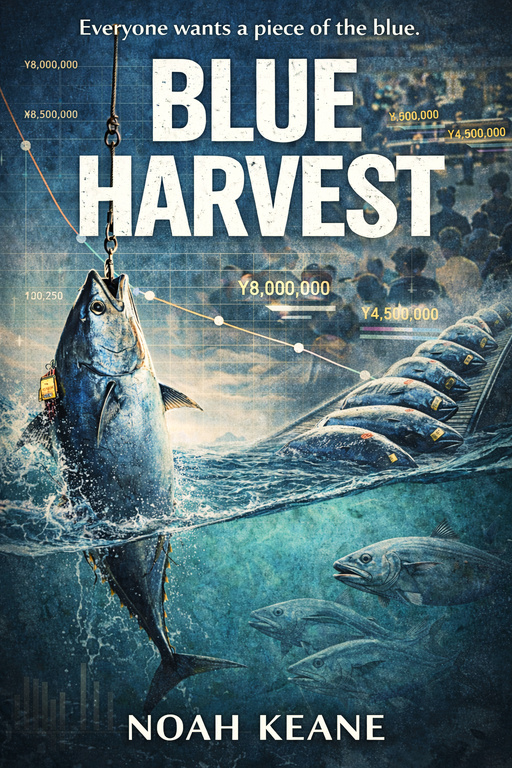
Marine tracker Marco Ibarra tags a giant bluefin tuna off the Atlantic coast and nicknames it Scartail, for the pale mark on its tail.
Marine tracker Marco Ibarra tags a giant bluefin tuna off the Atlantic coast and nicknames it Scartail, for the pale mark on its tail. Three weeks later, the tag pings inland at a cold store near Marseille and goes silent. In the city, chef Mika Sato is fighting to keep her restaurant open. She buys a "fully certified" bluefin from her supplier and serves it that night. Then a stranger walks into her kitchen with the tag ID and a market photo of a scar she cleaned herself. One fish. Two careers. An industry that needs a simpler story.
Available as an eBook and paperback.
PublicationAvailable
FormatsKindle eBook & Paperback
Publication dateMay 1, 2026
Edition1st
Kindle print length361 pages
ISBN978-9190145647
eBook ASINB0GZ74P8WS
Paperback ASIN9190145712
LanguageEnglish
ExtentFull-length novel
Paperback pages371 pages
Word count122 500 words
GenreContemporary literary fiction / Environmental fiction
SeriesThe Last Count
Book in seriesBook 2
Story scopeBook two in the Last Count series
ToneQuiet, precise, ethically tense; grounded rather than dramatic
PublisherUTP House
Realistic environmental storytelling, science under political pressure, slow-burn tension, and narratives about responsibility within large systems.
Themes of ecological decline, institutional pressure, public conflict, and moral stress; no graphic violence.
Read
Read an excerpt
“Are you planning your reputation three crises in the future, or our staff’s rent at the end of the month?” Léa asked.
“Both,” Mika said. “I don’t see why it has to be a choice.”
“That’s easy to say when you’re the one with your name on the door,” Léa said. “If we go under because you took a moral stand too early, my father will be fine. You’ll pick up consultancy gigs. The commis over there goes back to his parents’ flat. I go… what? Move in above the bistro and pretend that was the plan?”
Mika’s jaw tightened. “You think I’m not scared of losing this? You think I don’t see exactly how much of our lives are tied up in that stupid sign outside?”
“Then stop trying to knock out one of the few remaining pillars,” Léa said.
A chopping board clacked at the far end of the line. Hugo, the younger commis on veg, cleared his throat.
“Chef?” he said, eyes flicking between them. “Do you want the carrots in batons or rounds for the side on the fish?”
Listen
Listen to an excerpt
The audio sample slot is ready. A player will appear here when the recording is added.
Audio sample in preparationComplete title informationBlue Harvest
Everyone wants a piece of the blue.
Across the Atlantic and Mediterranean, bluefin tuna have turned into moving bullion. Chef contracts, ranch cages and betting on quotas keep money flowing while the fish themselves thin out. Marine tracker Marco Ibarra rides longliners and patrol ships with a laptop full of tag data that no one wants to read. When his work reveals a shadow fleet feeding a luxury market, Marco has to decide whether to leak, walk away, or stay onboard and watch the last giants sold on ice for someone’s celebration.