
The core set-piece is the island’s lantern Vigil on a cliff path, with real-world safety logistics (stewards, barriers, sea-rescue readiness) woven into the suspense.
Available now
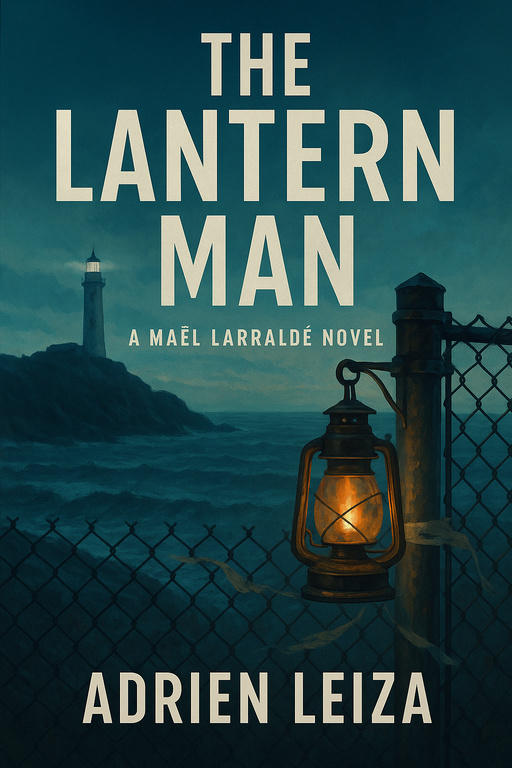
The Lantern Man
The Lantern Coast series · Book 2
A man fell from the cliff path. The island called it an accident. The numbers say otherwise.
A man fell from the cliff path. The island called it an accident. The numbers say otherwise. When Maritime Gendarmerie officer Maël Larralde is sent to the Breton island of Kernaez to audit a dangerous cliffside route, he expects crumbling infrastructure and a hostile council. What he finds is a pattern—years of falls, injuries, and deaths clustered around the same stretch of path, on the same storm-lashed nights. The islanders have a name for it. The Lantern Man. Doctor Léna Kervadec has spent a decade stitching up the aftermath. She knows the path is a killer. She knows the council has buried every warning. And she knows that the figure some claim to have seen standing in the dark, watching where the path is weakest, might not be a ghost story at all. As the next Vigil approaches—the annual lantern procession that draws hundreds onto the cliffs—Maël and Léna race to prove what the island refuses to admit: that someone has been using the weather, the crowds, and the crumbling edge to engineer disaster. But Kernaez protects its own. And the closer they get to the truth, the less certain they are about who that includes. A literary thriller about the lies communities tell themselves, the guilt that outlasts the storm, and what it costs to stand on a cliff and say enough.
Available as an eBook and paperback.
PublicationAvailable
FormatsKindle eBook & Paperback
Publication dateFebruary 22, 2026
Edition1st
Kindle print length398 pages
ISBN978-9190145173
eBook ASINB0GPNFTN4C
Paperback ASIN9190145429
LanguageEnglish
ExtentFull-length novel
Paperback pages376 pages
Word count145,900 words
GenreCoastal mystery thriller / Procedural suspense
SeriesThe Lantern Coast series
Book in seriesBook 2
Story scopeBook two in The Lantern Coast series
ToneTense, windswept, grounded; community pressure and controlled dread rather than gore
PublisherUTP House
Small-community secrets, maritime atmospheres, investigations built from witness accounts and weak infrastructure, and thrillers where “procedure” can protect—or conceal.
Death by falling/accidents, references to drowning/shipwreck loss, grief and sustained tension.
Read
Read an excerpt
“I told myself it was a steward,” he said. “Someone out of position. I’ve told myself that for fifteen years. But stewards shout. They wave their arms, blow whistles. They don’t… watch.” The difference in the words landed heavy between them. Maël shifted, the metal of the chair cold under his thigh. “You called him Lantern Man,” he said. “At the café. In your stories. You and the old hands.” Yann’s mouth twisted. “You heard that,” he said. “Sloppy of me.” “You didn’t deny it,” Maël said. Yann stared out toward the darkening line of cliff. “We joked, at first,” he said. “You have to understand that. When you watch storms all your life, you start naming things. The bad buoys, the clumsy captains, the gulls that steal bait. It’s how you cope. ‘There goes so-and-so, late again.’ ‘There’s the grey wave; she always breaks early.’ We saw that light three times, four, and someone said, ‘Ah, there’s the Lantern Man, taking attendance.’”
Listen
Listen to an excerpt
The audio sample slot is ready. A player will appear here when the recording is added.
Audio sample in preparationComplete title informationThe Lantern Man
A lantern procession. A cliff path. A watcher who doesn’t help.
On the Breton island of Kernaez, the Lantern Vigil is supposed to stop people from sneaking to the cliffs alone. One night each storm season, the whole village walks the headland path with lanterns for the dead and a public blessing for the living.
This year, under hard wind and bad visibility, a tourist goes over the edge in front of local doctor Lena Kervadec.
When the insurer threatens to pull cover, the council is forced to accept an outside audit. They get Maël Larralde: Maritime Gendarmerie officer, ex–rescue diver—and the man who turned a launch back the night Lena’s younger brother vanished in a wreck off Kernaez.
Maël’s orders are simple on paper: walk the route, check the barriers, sign off a safer Vigil.
On the ground, nothing is simple. Old injuries and near-falls cluster around the same stretch of path. A retired keeper remembers seeing a lone figure with a light on bad nights. An idealistic clerk dies in a “training accident.” And the insurer’s risk assessor, Camille Roussel, is always close enough to hear what Maël chooses not to say.
As another storm builds over the island, Maël has one more chance to do what he didn’t do on the night of Avel Mor: step outside the script, call a pattern what it is, and decide who he’s willing to lose to keep the living away from the drop.